
and the knowledge to use it for your greater good. Phil Chave
|
|
|
Distant Healer - Give yourself the gift of healing energy, the wisdom to accept it, and the knowledge to use it for your greater good. Phil Chave |
|
Home About Phil Request Healing Contact Treatments Articles Products Appointments Gift Solutions  Phil Chave creator of Distant Healer |
Insomnia and other Sleep DisordersUnderstanding Insomnia, Treating Insomnia, Living With Insomnia and Finding Ways to SleepSorry! A great way to start an article, I know, but I'm sorry because this is a blatant advert for one of my own products. Here's why: You'll have no doubt seen on the other pages that I have produced a Self Healing Meditation - Invoking the healer within. If not, you can find it here; The Healers Self Healing Meditation Page. To date, hundreds of these have gone out, to sufferers across the world. And I feel mightily privileged that so many have entrusted me to help them with what is a very difficult problem. Very often these individuals write first and so I am able to reply to them. Around 2 to 3 weeks after they purchase their CD, I sometimes write to ask how they are doing with the disc and whether they have any thoughts on it that they might like to share. Almost everyone who writes back reports that they have only just managed too, or have never, reached the end of the meditation, BECAUSE THEY FALL ASLEEP PART WAY THROUGH! And, this from some very experienced healers and others who meditate regularly. Because this happened so often, I did start to wonder if it was because I was a boring old f#rt and just sent them to sleep.....  But I am constantly reassured that this is simply because it is the most deeply relaxing routine they have ever heard. Phew! But I am constantly reassured that this is simply because it is the most deeply relaxing routine they have ever heard. Phew!So on that basis, if you have trouble sleeping I'm inviting you to try this as a way to treat your insomnia, rather than having to resort to medication. Insomnia has many triggers, such as money worries, family problems, health problems, job insecurity and other things, and these may be difficult to resolve in the short term. This can lead to a pattern of long term insomnia in many people, but one thing is certain; If you get a good nights sleep, dealing with these issues will be so much easier than if you're exhausted and not thinking straight.
Historic Update: Since writing this page many years ago, I have created another CD that works alongside, or independently, of the Self Healing Meditation discribed below. The website is here: SleepSoundlyNow.co.uk. You are very welcome to go there and learn a great deal more about insomnia and the cures available than can be described on this page. What the medical profession says about insomnia.Insomnia is a sleep disorder characterized by disturbances in a normal sleep pattern e.g. an inability to get to sleep or waking up after only a few hours sleep.Sleep is as essential to our wellbeing as food, air and water. It is a state of consciousnesses, which gives our body time to rest and build up our strength, to repair damaged tissue and to create a distinct gap between daily periods of intense mental and physical activity. Insomnia is having too little or poor-quality sleep often caused by worrying about things, or because we have a disease or psychological problem of some kind. Sometimes insomnia can cause, or be caused by, anxiety, depression, anger, grief, emotional or physical difficulties that seem insurmountable, our environment, pain in the body somewhere, and lots of other reasons. They all produce the same result, sleep deprivation, and consequently, exhaustion. While we are asleep, our body goes through different stages at approximately 90 minute cycles. These include light sleep, deep sleep and dreaming, or rapid eye movement (REM) sleep. REM sleep allows the mind time to file things away. When asleep, the mind is very active during REM sleep, sorting out and making sense of the events of the previous day. During this time the body can be subjected to high levels of autonomic arousal which causes our nervous system to get very agitated. The other types of sleep are restorative slow wave sleep and allow us time to regain our strength and vitality. There are different types of insomnia and it is likely you will be able to identify with at least one of them. They are:- Transient Insomnia (short term) - lasting for a night, a few nights or weeks only, perhaps connected to a stressful event e.g. an exam, divorce, a bereavement, anxiety or even jet-lag. Intermittent Insomnia (from time to time) - also lasting for a few nights or weeks, but with a tendency to recur on a regular basis. Acute Insomnia (medium term) - Lasting from 2 weeks to several months. Comes with increased chance of accidents and irritability due to sudden and severe sleep deprivation. Chronic Insomnia (long term) - Can last for several weeks, months or even years. Chronic insomnia can lead to mental health problems such as depression, or misuse of alcohol or other medicines in order to gain sleep. The most likely cause is usually a long term medical condition, less than ideal environmental factors, or relationship issues that cause long term anxiety. Every individual is different so, it is hard to define what ‘normal sleep’ is for us. Relevant factors include age, lifestyle, diet and environment. It is important to know that nearly everyone has problems sleeping at some time or other. Women are twice as likely to suffer from insomnia than men, and it is thought that a third of people in the UK have bouts of insomnia. What can I do to help my insomnia?
So, what do I do if all else fails? Try one of these: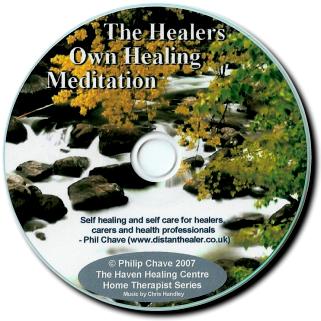 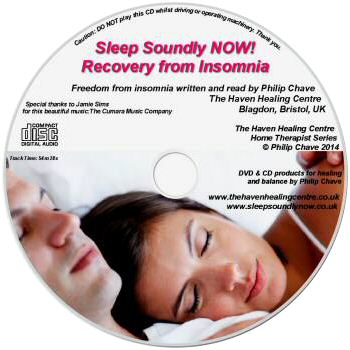
|
|
Main Menu •
Home Page •
About Phil •
Request Healing •
Contact •
Treatments •
Articles •
|
|
DISCLAIMER: This information is not presented by a medical practitioner and is for educational and informational purposes only. The content is not intended to be a substitute for professional medical advice, diagnosis, or treatment. Always seek the advice of your physician or qualified health provider with any questions you may have regarding a medical condition. Never disregard professional medical advice or delay in seeking it because of something you have read. The Haven Healing Centre is located at: The Orchard, Draycott Rd, Cheddar, Somerset, BS27 3RU |