and the knowledge to use it for your greater good. Phil Chave
|
|
|
Distant Healer - Give yourself the gift of healing energy, the wisdom to accept it, and the knowledge to use it for your greater good. Phil Chave |
|
Home About Phil Request Healing Contact Treatments Articles Products Appointments Gift Solutions  Phil Chave creator of Distant Healer |
Manual Treatment for Acute and Chronic Knee Pain, Patella Injuries and Disorders of the KneeTreatments and relief from degenerative knee conditions; Chondromalacia, Patello-femoral pain syndrome, Plica Syndrome, Jumper's knee, Osgood-Schlatter disease, Baker's cyst, Meniscus injury, Patellar tendinitis, Runner's knee etcPainful and Degenerative Conditions That Affect the Knees: Ankylosing spondylitis - knee arthritis symptoms may occur at a very young age (e.g., 3 years old), when the patient may experience recurring painful joints (e.g. knees, elbows) commonly misinterpreted as simple rheumatism 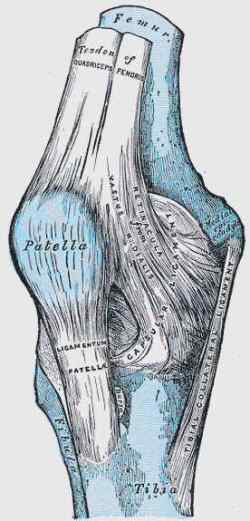 Anterior cruciate ligament injury - ACL injuries occur when an athlete rapidly decelerates, followed by a sharp or sudden change in direction (cutting). ACL failure has been linked to heavy or stiff-legged landing; as well as twisting or turning the knee while landing, especially when the knee is in the valgus (knock-knee) position.
Symptoms of an ACL injury include hearing a sudden popping sound, swelling, and instability of the knee (a "wobbly" feeling). Continued athletic activity on a knee with an ACL injury can have devastating consequences, resulting in massive cartilage damage, leading to an increased risk of developing osteoarthritis later in life. Arthritis - knee pain accompanied by excess fluid which accumulates in or around the knee joint. Baker's cyst - otherwise known as a popliteal cyst, is a benign swelling found behind the knee joint. Baker's cysts usually arise from almost any form of knee arthritis and cartilage (particularly the meniscus) tear. Baker's cysts can be associated with Lyme disease. Bursitis - inflammation of one or more bursae (small sacs) of synovial fluid in the body when movement of the inflamed bursa becomes difficult and painful. Elbows and knees are the most commonly affected. Chondromalacia patellae - pain in the front of the knee. It is common in young adults, especially soccer players, cyclists, rowers, tennis players, ballet dancers, horseback riders, runners, rugby players and snowboarders. An overuse injury. Clutton's joints - Henry Clutton (1850-1909) was a London surgeon who described painless symmetrical hydrarthrosis (accumulation of water in a joint cavity), especially of the knee joints: seen in hereditary syphilis. The ailment is called "Clutton's joints." Dislocated knee - Luxating patella (or trick knee, subluxation of patella, or floating patella), is a condition in which the patella, or kneecap, dislocates or moves out of its normal location. It can be associated with damage to the anterior cruciate ligament. (Multiple) Epiphyseal dysplasia - Fairbanks disease or multiple epiphyseal dysplasia (MED) is a rare genetic disorder (1 in 10,000 births) which affects the growing ends of bones. Bones usually elongate by a process that involves depositing cartilage at the ends of the bones, called ossification. This cartilage then mineralizes and hardens to become bone. In MED, this process is defective. Erythema nodosum (EN) - (red nodules) is an inflammation of the fat cells under the skin (panniculitis). It causes tender, red nodules that are usually seen on both shins. EN is an immunologic response to a variety of different causes. EN is frequently associated with joint pain and inflammation. 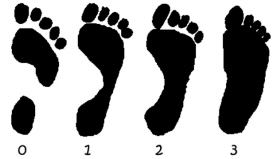 Fallen arches - Flat feet is an informal reference to a medical condition in which the arch of the foot collapses, with the entire sole of the foot coming into complete or near-complete contact with the ground. Gait changes may cause pain or discomfort to develop in the knee joints.
Femoral condyle fracture - Blimey that's gonna hurt! Gout - Gout (metabolic arthritis) is a disease created by a buildup of uric acid. Gout usually attacks the big toe, but it also can affect other joints such as the ankle, heel, instep, knee, wrist, elbow, fingers, and spine. Hemarthrosis - a bleeding into joint spaces. It can be associated with knee joint arthroplasty. Hip injury/replacement - Hip replacement, also hip arthroplasty, is a surgical procedure in which the hip joint is replaced by a prosthetic implant. This is usually the result of arthritic pain which may also affect the knee.  Housemaid's knee - Prepatellar bursitis, also known as housemaid's knee, is a common cause of swelling and pain above the patella (kneecap), and is due to inflammation of the prepatellar bursa.
Iliotibial band syndrome - symptoms range from a stinging sensation just above the knee joint (on the outside of the knee or along the entire length of the iliotibial band) to swelling or thickening of the tissue at the point where the band moves over the femur. The pain may not occur immediately, but may intensify over time and may persist. Pain may also be present below the knee, where the ITB actually attaches to the tibia. Juvenile idiopathic arthritis (JIA) - is the most common form of persistent arthritis in children. The cardinal clinical feature is persistent swelling of the affected joint(s), which commonly include the knee, ankle, wrist and small joints of the hands and feet. Lyme disease (knee arthritis) - Lyme disease is the most common tick-borne disease in the Northern Hemisphere. Lyme arthritis usually affects the knees, but in a minority of patients arthritis can occur in other joints, including the ankles, elbows, wrist, hips, and shoulders. Pain is often mild or moderate, usually with swelling at the involved joint. In some cases joint erosion occurs. Meniscus injury - refers to either of two specific parts of cartilage of the knee: The lateral and medial menisci. Both are cartilaginous tissues that provide structural integrity to the knee when it undergoes tension and torsion. In sports and orthopedics, people will sometimes speak of "torn cartilage" and actually be referring to an injury to one of the menisci. Osgood-Schlatter disease - is an inflammation of the growth plate at the tibial tuberosity, and is one of a group of conditions collectively called osteochondroses. The disease is most common in active boys and girls aged 11-15, is usually self-limiting and is caused by stress on the patellar tendon that attaches the quadriceps muscle at the front of the thigh to the tibial tuberosity. Following an adolescent growth spurt, repeated stress from contraction of the quadriceps is transmitted through the patellar tendon to the immature tibial tuberosity. This can cause multiple subacute avulsion fractures along with inflammation of the tendon, leading to excess bone growth in the tuberosity and producing a visible lump. Osteoarthritis (OA) - also known as degenerative arthritis, degenerative joint disease, is a clinical syndrome in which low-grade inflammation results in pain in the joints, caused by abnormal wearing of the cartilage that covers and acts as a cushion inside joints and destruction or decrease of synovial fluid that lubricates those joints. As bone surfaces become less well protected by cartilage, the patient experiences pain upon weight bearing, including walking and standing. Due to decreased movement because of the pain, regional muscles may atrophy, and ligaments may become more lax. Osteochondritis dissecans (OCD) - fragments of cartilage or bone have become loose within a joint, leading to pain and inflammation. These fragments sometimes make a squeaking sound when bending the joint. A lesion forms within the cartilage layer itself, giving rise to secondary inflammation. OCD most commonly affects the knee, though it can also affect other joints such as the ankle or the elbow. 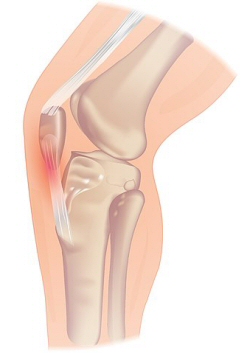 Patella fracture - A patella fracture is a fracture of the kneecap. It is usually the result of a hard blow to the front of the knee.
Patellar tendinitis - (patellar tendinopathy, also known as jumper's knee), is a relatively common cause of pain in the inferior patellar region in athletes. It is an overuse injury from repetitive overloading of the extensor mechanism of the knee. The microtears exceed the body's healing mechanism unless the activity is stopped. The injury occurs in many athletes, but is most common in sports such as Football, Soccer, Volleyball, Track & Field, Freerunning, Parkour, American Football, Wrestling, Netball, Basketball or Badminton which require explosive movements. Patello-femoral pain syndrome - is a term for a group of medical conditions that can cause pain in the front of the knee. Common in young adults, especially those specializing in jumps where the knees are under great stress. May also result from acute injury to the patella or from chronic friction between the patella and the groove in the femur through which it passes during motion of the knee. Pellegrine-Stieda syndrome - refers to the ossification of the superior part of the medial collateral ligament of the knee. Pigmented Villonodular Synovitis - often manifests initially as sudden onset, unexplained joint swelling and pain; the joint swelling is disproportionate to the amount of pain the patient feels at first. Decreased motion and increased pain occur as the disorder progresses as well as locking of the joint. The swelling often feels warm to the touch. Plica Syndrome - (also known as Plica Knee, or Synovial Plica Syndrome) occurs when the plica becomes irritated or inflamed. This inflammation is typically caused by the plica being caught on the femur, or pinched between the femur and the patella, most commonly located along the medial (inside) side of the knee, where the plica can tether the patella to the femur. Popliteal cyst - see Baker's cyst. Posterior Cruciate Ligament Injury - The PCL is the ligament that prevents the tibia (shin bone) from sliding too far backwards. Along with the ACL which keeps the tibia from sliding too far forward, the PCL helps to maintain the tibia in position below the femur (thigh bone). Knee pain, swelling, and decreased motion are common. 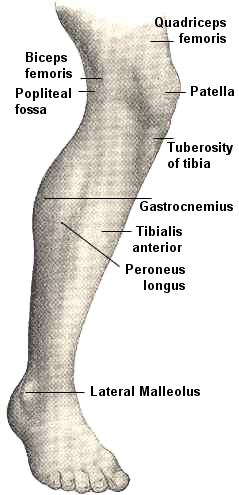 Reactive arthritis (Reiter’s syndrome) - is an autoimmune condition that develops in response to an infection 'trigger' in another part of the body. The arthritis that follows usually affects the large joints such as the knees causing pain and swelling with relative sparing of small joints such as the wrist and hand.
Rheumatoid arthritis (RA) - a chronic, systemic autoimmune disorder that most commonly causes inflammation and tissue damage in joints (arthritis) and tendon sheaths, together with anemia. It can be a disabling and painful condition, which can lead to substantial loss of function and mobility. Sinding Larsen-Johannson disease - bruising and subsequent tendonitis in the proximal attachment of the patellar tendon, causing tenderness and soft tissue swelling over the lower pole of the patella which is aggregated by activity. Synovial chondromatosis - is a disease affecting the synovium, a thin flexible membrane around a joint. A disease that often affects the knee. Synovitis - is the medical term for inflammation of a synovial membrane which lines the joints possessing cavities, namely synovial joints. The condition is usually painful, particularly when the joint is moved. The joint can swell due to fluid collection. Synovitis is associated with several forms of arthritis as well as rheumatoid arthritis, lupus, gout, and other conditions. Long term occurrence of synovitis can result in degeneration of the joint. Unhappy triad (or terrible triad) is an injury to the knee. It commonly occurs in contact sports (such as American football). Injury occurs when a lateral (outside) force to the knee is received while the foot is fixed on the ground in external rotation. This causes injury to three knee structures: the anterior cruciate ligament, the medial collateral ligament (or "tibial collateral ligament") and the medial meniscus Water on the Knee - occurs when excess fluid accumulates in or around the knee joint. There are many common causes for the swelling, including arthritis, injury to the ligaments or meniscus, or when fluid collects in the bursa. This condition is known as prepatellar bursitis. Causes of the swelling can include arthritis, injury to the ligaments of the knee or an accident after which the brain's natural reaction is to surround the knee with a protective fluid. There could also be an underlying disease or condition. My final message to you is this: If you have painful knees or legs, don't wait for it to get worse. Get treatment NOW!. If you live in any of the towns and villages in the list below, you are well within a 2 to 40 minute drive of The Haven Healing Centre, and I'd be delighted to see you. Please call Phil Chave on 01934 740275 to make your appointment or to talk about a treatment plan structured around your needs. Don't wait. Make your appointment today. You'll be glad you did!
|
|
All of These Local Areas Are Within a Short Drive of The Haven Healing Centre, Cheddar, Somerset Abbots Leigh, Ashwick, Avonmouth, Axbridge, Babington, Backwell, Badgworth, Bagley, Banwell, Barrow Gurney, Bason Bridge, Bath, Beckington, Berrow, Biddisham, Bishop Sutton, Bitton, Blackford, Blagdon, Bleadon, Bleadney, Bradford-on-Avon, Brean, Brent Knoll, Bristol, Burnham-on-Sea, Burrington, Butcombe, Cameley, Catcott, Chantry, Chapel Allerton, Cheddar, Chelwood, Chew Magna, Chew Stoke, Chilcompton, Churchill, Clapton, Claverham, Claverton, Cleeve, Clevedon, Clutton, Cocklake, Coleford, Compton Bishop, Compton Dando, Compton Martin, Congresbury, Coxley, Cranmore, Cross, Downhead, Draycott, Dundry, Dunkerton, East Brent, East Harptree, East Huntspill, Easton-in-Gordano, Edithmead, Emborough, Englishcombe, Evercreech, Failand, Farmborough, Farrington Gurney, Felton, Flax Bourton, Freshford, Frome, Glastonbury, Godney, Green Ore, Gurney Slade, Highbridge, Highbury, High Littleton, Hinton Blewett, Hutton, Inglesbatch, Kelston, Kenn, Kewstoke, Keynsham, Kilmersdon, Kingston Seymour, Langford, Litton, Locking, Long Ashton, Lower Weare, Loxton, Lympsham, Mark, Marksbury, Mells, Midsomer Norton, Monkton Combe, Nailsea, Nempnett Thrubwell, Nettlebridge, Newbury, Oldmixon, Paulton, Peasedown, Pensford, Pilton, Portishead, Prestleigh, Priddy, Priston, Pucklechurch, Pudlow, Puxton, Queen Charlton, Radstock, Redhill, Rickford, Ridgehill, Rodney Stoke, Rooks Bridge, Rowberrow, Saltford, Sandford, Shapwick, Shepton Mallet, Shipham, Sidcot, Somerton, Stanton Drew, Star, Staverton, St Georges, Stoke St Michael, Ston Easton, Stone Bridge, Stowey, Street, Temple Cloud, Tickenham, Timsbury, Trowbridge, Ubley, Weare, Wedmore, Wellow, Wells, West Harptree, West Horrington, Weston-Super-Mare, West Pennard, Whatley, Whitchurch, Winford, Winscombe, Wookey, Wraxall, Wrington, Yatton For all enquiries please call Phil on: 01934 740275 |
Main Menu •
Home Page •
About Phil •
Request Healing •
Contact •
Treatments •
Articles •
|
|
DISCLAIMER: This information is not presented by a medical practitioner and is for educational and informational purposes only. The content is not intended to be a substitute for professional medical advice, diagnosis, or treatment. Always seek the advice of your physician or qualified health provider with any questions you may have regarding a medical condition. Never disregard professional medical advice or delay in seeking it because of something you have read. The Haven Healing Centre is located at: The Orchard, Draycott Rd, Cheddar, Somerset, BS27 3RU Picture of the Right knee-joint, anterior view is in the public domain from Gray's Anatomy. The Footprint with Flat feet is on Wikimedia Commons and in the public domain Image of Prepatellar bursitis, with a background reference knee by Atropos235, Wikimedia Commons. Image of Jumpers Knee is by Injury Map on Wikimedia Commons Image of the right leg is from Gray's Anatomy (1240) and is in the public domain. |